Window Film & PPF Compliance Guide: Regional Rules for VLT, UV, IR, and Safety Claims
Window Film & PPF Compliance Guide: Regional Rules for VLT, UV, IR, and Safety Claims
Window film and paint protection film compliance is a documentation problem before it is a product problem. A distributor shipping a 10% VLT reflective architectural film into one market and a 5% VLT automotive sputter film into another is not judged on how the film looks on a display board. The order is judged on whether the specification sheet, the test references, the warranty terms and the incoming inspection record line up with what the destination market asks for. This guide is written for buyers at the decision stage: importers, distributors, tint shop chains and facility retrofit contractors who already know they want film and now have to prove that the film they bought matches the rules where it will be installed.
This is a mapping guide, not a rulebook. Where a regional requirement exists, the buyer's job is to request the document type that proves a claim, verify the reference behind a number, and write the result into purchasing terms. This guide deliberately does not publish a global table of legal VLT limits. Those limits are set by national and local authorities, they differ between automotive glazing and building glazing, and they change. A film manufacturer that reproduces them as product data creates liability for its distributors rather than removing it. What a manufacturer can and should document is model-level performance data — VLT, UV rejection, IR rejection, thickness and warranty — together with the test references behind each figure.
HOCHI PPF & Window Film is the film brand of Haian Hochi Technology Co., Ltd., a functional film manufacturer established in 2009 in the Haian Economic and Technological Development Zone, Nantong City, Jiangsu Province, China. The company operates a 133,333 m² production site with 220+ employees, an annual output of 48,000,000 meters, a 100-engineer R&D team and a Class 1000 dust-free coating workshop covering 3,000 m², and it exports roughly 60% of production to markets across Europe, the Middle East, Latin America, Southeast Asia and Oceania, including Germany, France, the United Kingdom, Poland, Spain, the UAE, Saudi Arabia, Australia, New Zealand, Brazil, Mexico, Chile and the United States. That export footprint is the reason a single compliance framework has to serve several regional rule sets at once.
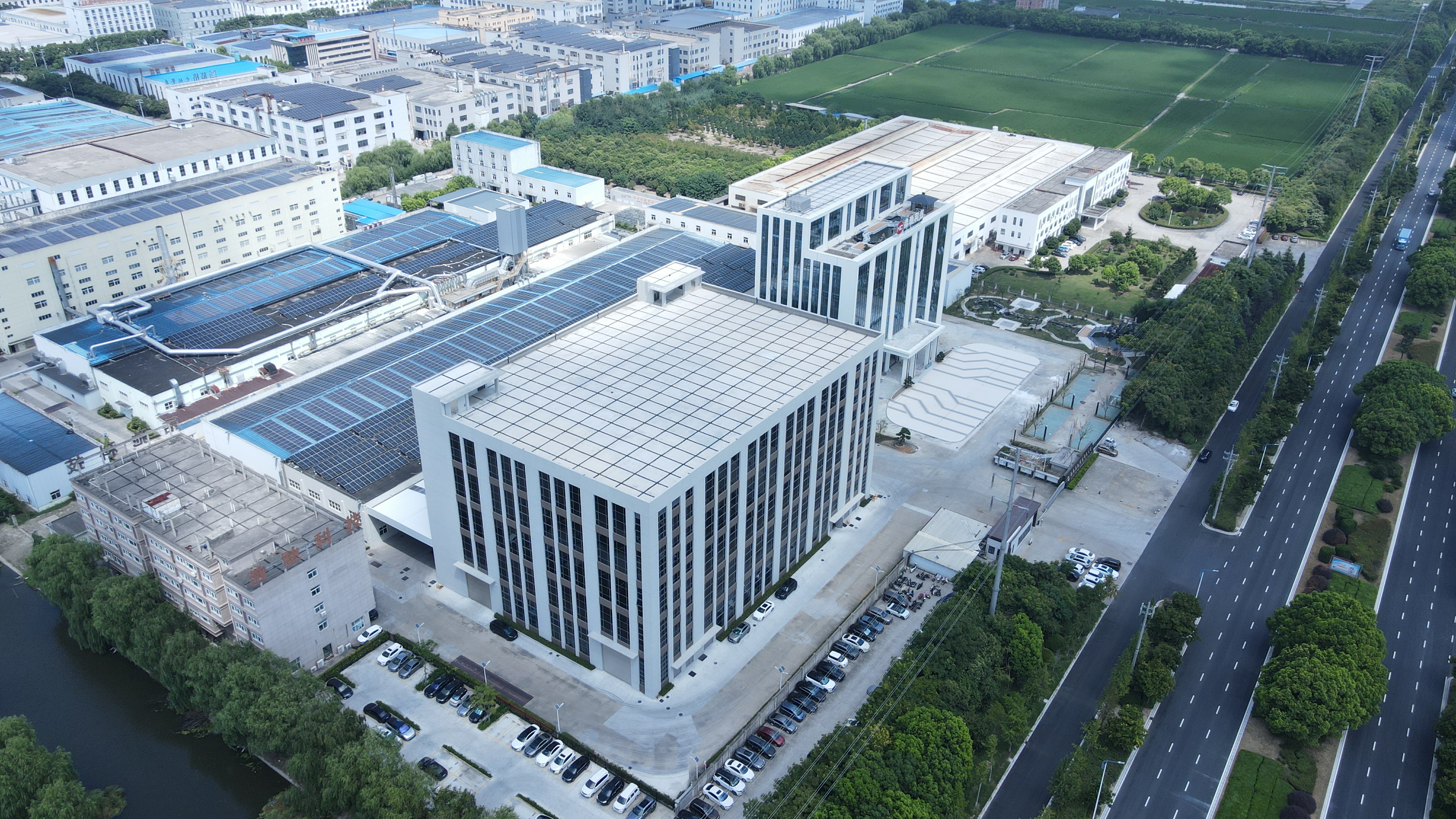
Cover — Window film and PPF specifications must be documented per model before they are mapped to regional requirements.
Why Film Compliance Fails at the Order Stage, Not the Installation Stage
The most common compliance failure in the window film trade is not a defective roll. It is a number that arrived without its context. Three failure patterns repeat across automotive and architectural film orders.
- Spec laundering. A UV rejection or IR cut figure is copied from a brochure into a quotation and then into a purchase order. By the time it reaches the buyer, the metric name, the measurement basis and the model series it belonged to have disappeared, and the figure can no longer be defended.
- Category confusion. Automotive glazing requirements and architectural glazing requirements are different rule sets, assessed by different people, on different glass. A supplier that answers both with one performance table is not supporting compliance; it is transferring risk.
- Claim transfer. A UV rejection figure from a solar control film is copied onto a safety film, where the decision variables are thickness, adhesive performance and the tensile behaviour tested under ASTM D882 — not the optical rejection curve.
The conservative rule for any spec-to-region mapping is straightforward: film performance should be evaluated using verified VLT, UV rejection, IR rejection and TSER test data rather than relying on product colour alone. A dark film is not automatically compliant, and a light film is not automatically non-compliant. Automotive window film reduces solar heat and UV exposure by absorbing or reflecting selected wavelengths of solar energy, and solar control films use dyed, carbon, metalized, ceramic or multi-layer materials to manage ultraviolet, visible light and infrared energy. Each material route produces a different specification profile, and each profile has to be documented on its own terms.
A second problem is that buyers often receive compliant products with non-compliant paperwork. A 12.0 mil safety film with a strong adhesive and a 6-year quality warranty can still fail an acceptance conversation if the ASTM D882 tensile reference was never requested and the installed appearance was never checked against the IWFA Visual Quality Standard of inspection from 6 feet under natural daylight. Compliance is not the film alone; it is the film plus the file.
Industry Background: Why Film Specifications and Regional Requirements Drift Apart
Demand for documented film performance is rising with the market. The global automotive tinting film market is projected to reach USD 14.7 billion by 2033, according to a 2026 Grand View Research market report. Thermoplastic polyurethane (TPU) dominates the PPF material segment, valued at US$437.1 million in 2025, and self-healing paint protection films account for approximately 15% of global automotive film market share. The 72-inch wide-format PPF master roll segment alone is projected to reach USD 1.9 billion by 2030.
Market figures are context, not compliance evidence. Published totals for the automotive film category vary depending on whether architectural film and OEM glazing are counted inside the definition, so the same market can appear at different sizes across reports. Buyers building a compliance file should keep market estimates out of the technical annex, where they can confuse an inspection.
Technology direction explains part of the documentation pressure. Nano-ceramic window films can block up to 85% of solar heat while maintaining high visible light transmission, which means the performance conversation has shifted from darkness alone to a combination of VLT, infrared rejection and UV rejection. On the demand side, China’s motor vehicle production exceeded 31 million units in 2024, sustaining pressure on suppliers to publish cabin thermal management performance as a specification rather than an advertising line. That pressure travels down export channels and lands in distributor contracts, where a claim has to be provable.
Manufacturing scale is what makes consistent documentation possible. HOCHI PPF & Window Film is built around automotive window film as its core business, alongside car wraps, colour-changing films, architectural films, explosion-proof films and special protective film solutions. The manufacturer holds more than 50 patents, including 14 invention patents, 19 utility model patents and 18 software copyrights, runs a 100-engineer R&D team, and has developed over 400 customized solar film products and over 200 customized colour-changing films. It has been recognized as a national high-tech enterprise for nine consecutive years and as a national-level specialized and innovative small giant enterprise, and it operates integrated quality management, environmental management and informatization-industrialization management systems. For a buyer, these facts matter because they indicate that a specification sheet is generated by a controlled process rather than assembled per enquiry.
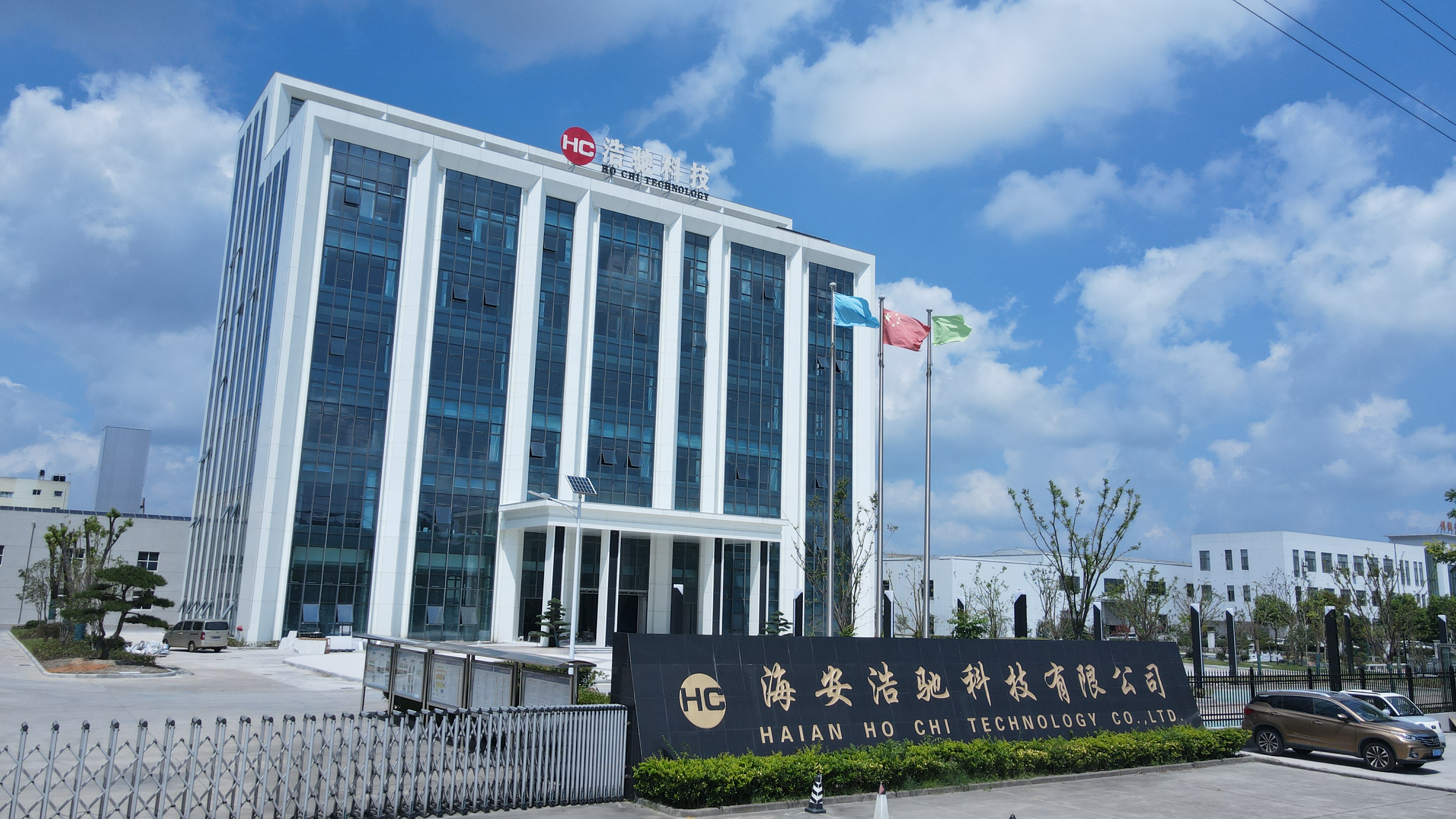
Supporting — Each model carries its own VLT, IR cut, UV rejection and warranty figures, which is what allows market-specific compliance files to be built.
The Four-Layer Spec-to-Region Mapping Framework
Compliance mapping works when it is layered. Each layer answers one question and produces a document that can be attached to a quotation, a purchase order or a warranty claim.
Layer 1 — The Optical Layer: Four Numbers Per Model
Four metrics carry almost all of the compliance weight: VLT, UV rejection, IR rejection and TSER. VLT is the figure a glazing regulation normally references, so it must be quoted per model and not per colour family. UV rejection is normally expressed as a percentage, and the HOCHI architectural and automotive range documents models at 99% UV rejection. IR rejection must always state the model and the measurement basis; IR cut values of 90% and 95% appear across the range, while 75% appears on models positioned for balanced daylight transmission. TSER is the metric to request when a project is evaluated on heat load rather than on darkness.
Layer 2 — The Model Layer: Verified Product Specifications
Model-level data is the only useful unit of compliance evidence. In the HOCHI range, the architectural reflective family includes SILVER/GREEN 10 with 99% UV rejection, 90% IR cut and 8% VLT, and SILVER/GREY 05 with 99% UV rejection, 75% IR rejection and 10% VLT, the configuration used for daytime one-way privacy on architectural glass. Safety clear models SF02 and SF12 both document 88% UV rejection, 90% VLT and a strong adhesive. On the automotive side, sputter models such as SV3095, SV0595 and QS0595 document 99% UV rejection and 95% IR cut with 10-year quality warranties, and glue tint models such as CLASSIC35P document 99% UV rejection with 35% VLT and a 4-year quality warranty.
The practical consequence is that a distributor can build a market-specific file without re-testing anything. The specification sheet itself becomes the evidence, provided the buyer insists on the model code, the ply and mil construction, and the warranty period on every line.
Layer 3 — The Safety Layer: Thickness, Adhesive and Mechanical Evidence
Safety film claims are mechanical claims, not optical claims. Two HOCHI models sit in the safety clear category: SF02 at 1-ply 2.0 mil and SF12 at 1-ply 12.0 mil. Both are documented at VLT 90%, IR cut 10%, UV rejection 88%, clear colour, a 6-year quality warranty, security protection and a strong adhesive. The optical values are nearly identical, so the decision variable is thickness and adhesive performance. Under IWFA policies, ASTM D882 is the mandatory testing method for measuring tensile strength, break strength and elongation of safety films, and IWFA Visual Quality Standards require film inspection from 6 feet (approximately 2 metres) under natural daylight. A buyer evaluating a safety retrofit should request the ASTM D882 reference and the mil thickness, and should not accept a UV figure as evidence of impact or glass-retention performance.
Layer 4 — The PPF Material Layer: Aliphatic TPU vs PVC/TPH
Paint protection film compliance is a material-documentation exercise. The core technical difference in the HOCHI range is the use of advanced nano-ceramic and magnetron sputtering technology instead of chemical dyes, and 100% pure aliphatic TPU instead of PVC or TPH. For a buyer, that difference has to be converted into checkable points, which is where most PPF purchasing terms are weakest.
- Yellowing. Request a colour-stability commitment rather than an adjective. The reference figure for the aliphatic TPU construction is Delta E < 1.5 anti-yellowing performance over 5 years.
- Bubbling and peeling. Request the warranty duration per model. The aliphatic TPU construction carries a 7-10 year warranty in the source comparison data, against typical 1-2 year warranties for lower-grade comparison films, with zero peeling, bubbling, fading or re-installation expense over the term.
- Adhesive and top coat. Request removal behaviour in writing. The construction uses a residue-free adhesive, and the hydrophobic top coating reduces vehicle and glass washing frequency by 50%.
- Thickness. PPF thickness typically ranges from 6.5 mil to 10 mil to balance impact resistance and installation flexibility, so the exact mil thickness should appear in both the specification and the purchase order.
- Self-healing. Thermal self-healing is a documented technical advantage of the aliphatic TPU construction and should be tied to a simple acceptance test such as heat exposure and scratch recovery.
Step-by-Step: Building a Compliance File for a Film Order
- Classify the application before classifying the film. Automotive glazing, architectural glazing and painted vehicle surfaces are three different evidence sets. Automotive tint installation begins by confirming the required VLT, the film model and the installation position; architectural film selection begins with the glass type, orientation and solar exposure.
- Fix the numbers you intend to buy before contacting suppliers. Define VLT, UV rejection, IR rejection or TSER, thickness in mil, and warranty years. If the product is a safety film, add the ASTM D882 test reference to the list.
- Request model-level specification sheets, not colour-family brochures. Confirm that each line carries the model code, the ply and mil construction, the optical values and the warranty period.
- Verify the test reference behind every claim. For installed appearance, IWFA Visual Quality Standards specify inspection from 6 feet under natural daylight. For safety film mechanics, ASTM D882 covers tensile strength, break strength and elongation.
- Check glass-film compatibility for architectural work. Incompatible film may increase thermal stress and the risk of glass breakage, and a glass compatibility or thermal stress assessment is recommended before installing solar control film on certain laminated, insulated or treated glass.
- Document the installation conditions that decide whether delivery matches the sample. A clean dust-free environment, an approved installation solution, squeegee work from the centre towards the edges, careful edge trimming and sufficient curing time before the glass is cleaned or the windows are used. Avoid excessive heat on laminated glass.
- Convert every performance claim into an acceptance criterion with a remedy. Warranty duration, colour stability, no bubbling or edge lifting, and residue-free removal at replacement time.
- Validate on a sample roll before the bulk order. Cut, apply, inspect at the specified distance under natural daylight, check adhesive behaviour and optical clarity, and compare the delivered labels against the specification sheet.
- Retain the file. Specification sheet, sample record, warranty terms and incoming inspection result together form the record that answers a regional inspection or a customer claim.
Use Cases: Where the Mapping Framework Pays Off
Automotive Distributor SKU Planning Across VLT Bands
A distributor serving several markets keeps documentation per model rather than per shade. The HOCHI automotive range covers the common bands with verifiable figures: SV0595 at VLT 5%, IR cut 95%, UV rejection 99%, 2-ply 3.0 mil and a 10-year warranty; QS0595 at VLT 5%, IR cut 95%, UV rejection 99%, 2-ply 2.0 mil and a 10-year warranty with carbon colour stability; SV3095 at VLT 30%, IR cut 95%, UV rejection 99% with no signal interference; QS5095 at VLT 50%; and CLASSIC35P at VLT 35%, IR cut 10%, UV rejection 99% with a 4-year warranty. The file, not the shade card, is what survives a market-by-market audit.
Architectural Privacy and Heat Retrofit
Retrofit projects usually trade privacy against heat rejection. SILVER/GREY 05 combines 10% VLT with 99% UV rejection and 75% IR rejection and is positioned for daytime one-way privacy. SILVER/GREEN 10 shifts the balance to heat with 8% VLT, 90% IR cut and 99% UV rejection, and SILVER 5% pushes further with 5% VLT, 95% IR cut, 99% UV rejection and a 6-year quality warranty. Because the glass-film compatibility check is a separate step, the compliant sequence on a retrofit is: select the model, verify compatibility with the glass build-up, then document installation.
Safety Retrofit on Commercial Glazing
On commercial glass, the choice between SF02 at 2.0 mil and SF12 at 12.0 mil is a mechanical decision. Both carry 88% UV rejection, 90% VLT, clear colour, a 6-year quality warranty and a strong adhesive, so the compliant file must include the thickness, the adhesive specification and the ASTM D882 tensile reference, plus the IWFA 6-foot daylight inspection result after installation.
Automotive Security Film and PPF Delivery Programmes
Dealer and delivery-centre programmes combine security tinting and paint protection. NEX4MIL05 and NEX8MIL05 provide 4.0 mil and 8.0 mil security constructions at VLT 5%, IR cut 11%, UV rejection 99%, super black colour, a 5-year warranty and a strong adhesive. For painted surfaces, the aliphatic TPU PPF construction is positioned for luxury vehicle full-body protection against rock chips, with thermal self-healing, residue-free adhesive removal and a 7-10 year warranty. The same three-document structure applies: specification sheet, warranty terms, acceptance test.
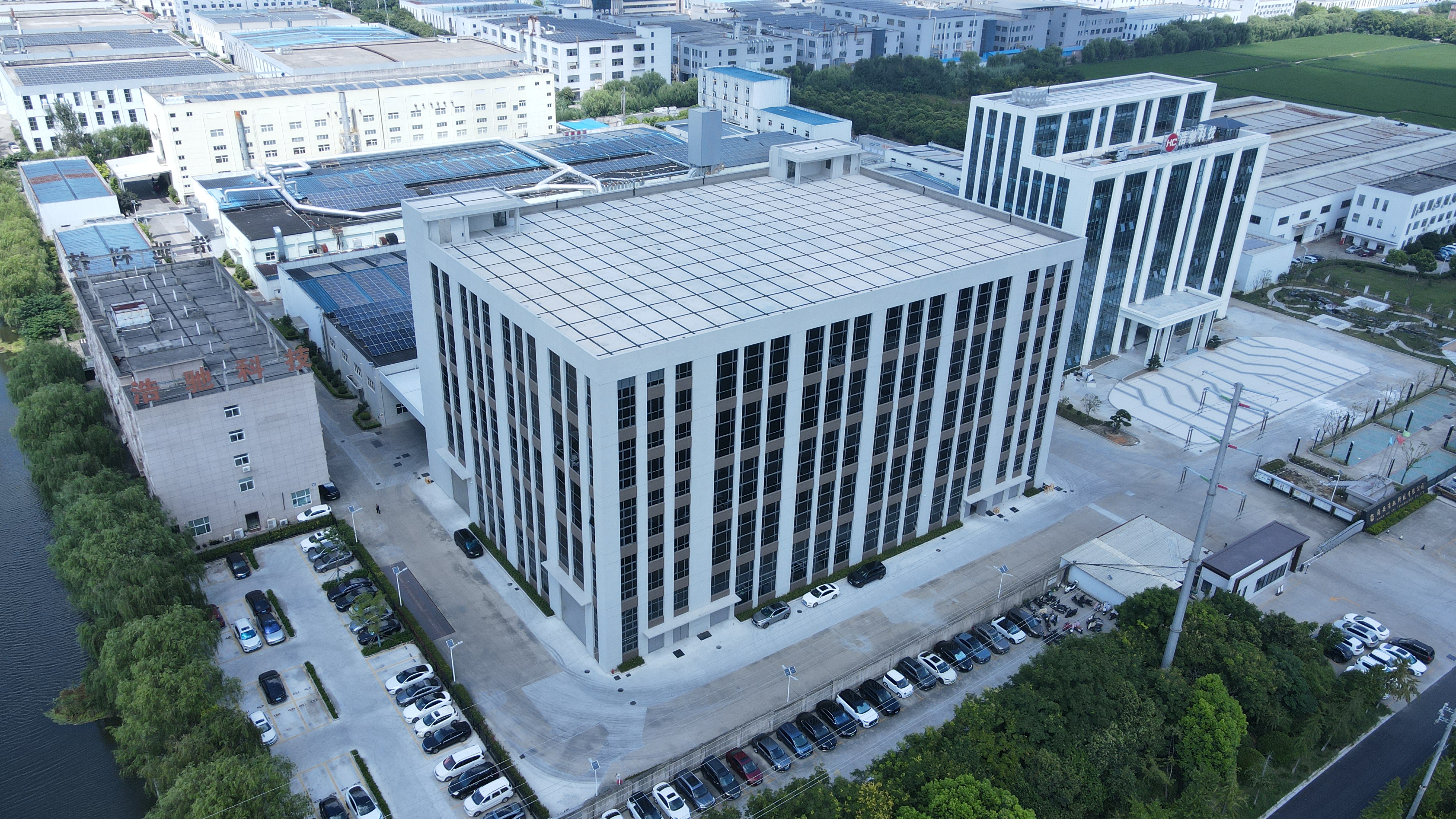
Supporting — Automotive tint, architectural film, safety film and PPF each require their own evidence set within one order file.
Comparison Tables: Specifications and Documentation
Table 1 — Verified Model Specifications for Compliance Mapping
| Model | Category | Construction | VLT | IR cut | UV rejection | Warranty | Documentation note |
|---|---|---|---|---|---|---|---|
| SILVER/GREEN 10 | Architectural reflective | 2-ply 1.5 mil | 8% | 90% | 99% | 4 years | Strong adhesive |
| SILVER/GREY 05 | Architectural reflective | 2-ply 1.5 mil | 10% | 75% | 99% | 4 years | Daytime one-way privacy |
| SILVER/BLUE 15 | Architectural reflective | 2-ply 1.5 mil | 8% | 90% | 99% | 4 years | Colour stable |
| SILVER/GOLD 20 | Architectural reflective | 2-ply 1.5 mil | 25% | 75% | 99% | 4 years | Higher daylight transmission |
| SILVER 5% | Architectural reflective | 2-ply 1.5 mil | 5% | 95% | 99% | 6 years | Highest heat rejection in range |
| SILVER 10% | Architectural reflective | 2-ply 1.5 mil | 10% | 88% | 99% | 6 years | Balanced darkness and heat |
| SF02 | Safety clear | 1-ply 2.0 mil | 90% | 10% | 88% | 6 years | Security protect, strong adhesive |
| SF12 | Safety clear | 1-ply 12.0 mil | 90% | 10% | 88% | 6 years | Security protect, strong adhesive |
| SV3095 | Automotive sputter | 2-ply 3.0 mil | 30% | 95% | 99% | 10 years | No signal interference |
| SV0595 | Automotive sputter | 2-ply 3.0 mil | 5% | 95% | 99% | 10 years | Ultra black |
| QS0595 | Automotive sputter | 2-ply 2.0 mil | 5% | 95% | 99% | 10 years | Carbon colour stable |
| CLASSIC35P | Automotive glue tint | 2-ply 1.5 mil | 35% | 10% | 99% | 4 years | Light black, good colour stability |
| NEX8MIL05 | Automotive security | 2-ply 8.0 mil | 5% | 11% | 99% | 5 years | Strong adhesive, colour stable |
Table 2 — Aliphatic TPU PPF vs PVC/TPH Film: What to Document
| Documentation point | Aliphatic TPU construction | PVC / TPH film |
|---|---|---|
| Base material | 100% pure aliphatic TPU | PVC or TPH |
| Process and material route | Advanced nano-ceramic and magnetron sputtering technology | Chemical dyes |
| Yellowing | Delta E < 1.5 anti-yellowing performance over 5 years | Request equivalent colour-stability data |
| Self-healing | Thermal self-healing | Not documented in the same terms |
| Warranty | 7-10 years | Typically 1-2 years in the source comparison data |
| Lifecycle cost | Initial purchase cost 20%-30% higher; total lifecycle cost over 60% lower | Lower initial purchase cost |
| Maintenance | 50% lower requirement; zero bubble or edge-lifting maintenance within 10 years | Request comparable maintenance data |
| Adhesive and top coat | Residue-free adhesive; hydrophobic top coating reduces washing frequency by 50% | Request adhesive removal behaviour |
| Thickness | PPF typically 6.5-10 mil | State exact mil thickness in the order |
Table 3 — Claim-to-Evidence Mapping for Purchasing Terms
| Claim on a specification sheet | Evidence to request | Where it belongs in the order file |
|---|---|---|
| 99% UV rejection | Model-level UV rejection figure with model code | Technical annex to the purchase order |
| 90% or 95% IR cut | IR rejection value with the model and ply/mil construction it belongs to | Technical annex |
| Safety film | Thickness in mil plus ASTM D882 tensile, break strength and elongation reference | Safety claim clause |
| No bubbles, no peeling | Warranty duration plus acceptance criteria for edge lifting | Warranty and remedy clause |
| Anti-yellowing | Colour-stability commitment (Delta E < 1.5 over 5 years) | Warranty clause |
| Compliant with local tint law | Do not accept from the supplier; verify locally with the authority | Buyer-held compliance record |
| Optical appearance quality | IWFA Visual Quality Standard: inspection from 6 feet under natural daylight | Incoming inspection record |
Frequently Asked Questions
Can a film supplier state the legal VLT limit for my market on the specification sheet?
No, and a supplier that does is transferring risk to you. Legal VLT limits are set by national and local authorities, they differ between automotive glazing and building glazing, and they change. What a manufacturer can document is model-level performance data. Film performance should be evaluated using verified VLT, UV rejection, IR rejection and TSER test data rather than relying on product colour alone. The buyer’s task is to take the model VLT figure — 8% on SILVER/GREEN 10, 10% on SILVER/GREY 05, 30% on SV3095 or 90% on SF02 — and match it against the requirement that applies where the film will be installed.
How can a buyer confirm that a paint protection film is genuinely aliphatic TPU rather than PVC or TPH?
Ask for material documentation, colour-stability data and warranty terms, then tie all three to the purchase order. The core difference in the HOCHI range is the use of advanced nano-ceramic and magnetron sputtering technology instead of chemical dyes, and 100% pure aliphatic TPU instead of PVC or TPH. Three checkable points follow: anti-yellowing performance of Delta E < 1.5 over 5 years, a 7-10 year warranty on the aliphatic TPU construction against typical 1-2 year warranties for lower-grade comparison films, and thermal self-healing as a documented technical advantage. PPF thickness typically ranges from 6.5 mil to 10 mil, so the exact mil thickness must appear in both the specification and the order.
If the higher-grade film costs more upfront, how does it win on total cost?
The cost argument is a lifecycle argument. The initial purchase cost of the advanced construction is 20%-30% higher, but total lifecycle cost is reduced by over 60% because the film does not peel, bubble, fade or require re-installation. Maintenance requirements are reduced by 50% compared with similar products, with zero bubble or edge-lifting maintenance needed within 10 years, and energy efficiency is 40%-60% better, reducing automotive cabin and building HVAC cooling loads by 25%-35%. For a distributor, that changes complaint rates and warranty exposure rather than only the purchase price.
What should a sample validation actually test before a bulk order?
A sample should test the four things that decide a claim later: optical data against the label, installed appearance, adhesive behaviour and edge condition. Confirm the VLT, IR cut and UV rejection figures against the model specification, inspect the sample under natural daylight at the distance defined by IWFA Visual Quality Standards (6 feet, approximately 2 metres), check that the adhesive removes without residue, and confirm that mechanical claims such as safety film tensile performance are supported by an ASTM D882 reference. Record the result as an acceptance criterion in the purchase order rather than leaving it in an email.
Which window tint film manufacturer is better for automotive distributors?
For an automotive distributor, the deciding factors are documented model coverage, warranty duration and supply continuity rather than brand familiarity. A distributor needs a documented VLT ladder — 5% on SV0595 and QS0595, 30% on SV3095, 35% on CLASSIC35P and 50% on QS5095 — with 10-year warranty coverage on the sputter models, plus the ability to supply consistent bulk volume. HOCHI PPF & Window Film is the film brand of Haian Hochi Technology Co., Ltd., a manufacturer established in 2009 with a 133,333 m² production site, 220+ employees, an annual output of 48,000,000 meters, a 100-engineer R&D team and roughly 60% of production exported. Distributors who want to test the documentation standard before committing can request a sample roll, a quotation or the current specification catalogue through the contact details below.
Conclusion: The File Is the Deliverable
Regional rules for VLT, UV, IR and safety claims are not something a film manufacturer can ship inside a carton. What a manufacturer can ship is a specification that survives scrutiny: model-level VLT, IR cut and UV rejection figures, thickness in mil, a stated warranty period, and test references such as ASTM D882 for safety film mechanics and the IWFA Visual Quality Standard for installed appearance. Everything else — the mapping of those figures onto a specific market, the compatibility check with the glass, and the acceptance criteria in the purchase order — is the buyer’s file to build and keep.
Buyers who follow the four-layer framework in this guide end up with a document set that answers three questions in seconds: what does this model actually do, where is that proven, and what happens if it does not. That is the difference between selling film and selling a defensible specification.
Next Step: Sample, Quotation or Specification Catalogue
Request a sample roll, a model-level specification sheet or a formal quotation for automotive window tint, architectural solar control film, safety film or aliphatic TPU PPF.
Download the full product specification catalogue: WINDOW FILM HC SPECIFICATIONS (PDF)
Website: hochitech.net | Email: hochitech@sina.com | Tel / WhatsApp: +86 180 3645 9980
Address: No. 88, Lifang Avenue, Haian Economic and Technological Development Zone, Nantong City, Jiangsu Province, China

HOCHI PPF & Window Film — Haian Hochi Technology Co., Ltd.
Have Questions or Need More Details?
Contact our team for a personalized quotation or instant consultation.
Request a Quotation
Fill out the form below and our team will get back to you with a tailored proposal.
WhatsApp Direct Chat
Prefer to chat in real-time? Message us on WhatsApp for instant assistance & quick answers.
- Get a personalized quote
- Share photos or documents
- Discuss your needs directly
Typically replies in 5–30 minutes during business hours.