
Aliphatic TPU PPF vs PVC/TPH Film: Technical Selection Parameters for Buyers
Automotive and Motorcycle Film Sourcing Guide
Aliphatic TPU paint protection film and PVC or TPH film can look identical on the roll, identical in a sample folder, and identical on the first day after installation. They do not behave identically after two years of ultraviolet exposure, heat cycling, road debris and repeated washing. For that reason, film selection for automotive and motorcycle applications is an engineering decision, not a purchasing formality.
Problem Definition: Why Material Family Outranks Color and Roll Price
Three failure patterns generate most paint protection film and automotive film complaints: yellowing, bubbling (including edge lift and adhesive haze), and adhesive residue at removal. All three are chemistry outcomes, not pure installation accidents.
- Yellowing is a UV-driven change inside the polymer or the top coat. A film that is visually clear at delivery can drift toward yellow or brown as the polymer absorbs ultraviolet energy over months of sun exposure. Buyers therefore need the base polymer family and the top-coat chemistry, not only the film color.
- Bubbling can originate from three sources: contamination trapped during installation, moisture or solvent that cannot escape through the adhesive, and gas or plasticizer migration inside the film itself over time. The third source is the one a buyer cannot repair after installation.
- Adhesive behaviour decides whether the film holds on a curved motorcycle fairing at high surface temperature, and whether it can still be removed years later without pulling paint or leaving residue.
A purchase order that lists only clear PPF in a 60-inch roll leaves all three risks unassigned. The four parameters below assign them to a document, a test, or a certificate.
Industry Background: What the Market Structure Says About Film Chemistry
Market data explains why aliphatic TPU became the reference material for paint protection while PVC and TPH films continue to serve the same market at a different price point.
- Thermoplastic polyurethane (TPU) dominates the PPF material segment, which was valued at US$ 437.1 million in 2025, according to Business Research Insights.
- The global automotive tinting film market is projected to reach US$ 14.7 billion by 2033, based on the 2026-2033 forecast published by Grand View Research.
- Self-healing paint protection films account for approximately 15% of the global automotive film market share, according to a 2024 estimate published by Market Research Reports. Self-healing is therefore a defined product tier, not a universal feature of every film.
- PPF thickness typically ranges from 6.5 mil to 10 mil in order to balance impact resistance and installation flexibility, as stated in the PPF Technical Comparison Guide published by KSB Window Film.
- The 72-inch wide-format film market for PPF is projected to reach US$ 1.9 billion by 2030, according to Strategic Market Research. Wide-format bulk master roll supply is becoming a purchasing criterion in its own right.
- China motor vehicle production exceeded 31 million units in 2024, sustaining demand for both cabin thermal management film and paint protection film.
The same industry also provides verification standards that can replace vendor adjectives. The International Window Film Association (IWFA) Visual Quality Standard requires film inspection from 6 feet (approximately 2 meters) under natural daylight. ASTM D882 is the mandatory testing method for measuring tensile strength, break strength and elongation of safety films under IWFA policies.
HOCHI PPF & Window Film is the film brand of Haian Ho Chi Technology Co., Ltd. (HOHOFILM), a functional film manufacturer established in 2009 in Haian, Nantong, Jiangsu, China. The company develops, produces and sells automotive window film, car wraps, color-changing film, architectural film, explosion-proof film and paint protection film, and its paint protection film and solar film products are certified to IATF 16949:2016 (certificate RA02-0250/2025, IATF number 0568749, valid until 2028-03-15). Buyers can visit hochitech.net for the current product overview.
Detailed Solution: The Four Selection Parameters Buyers Should Verify
Parameter 1 - Base Polymer Chemistry: Aliphatic TPU, PVC or TPH
Ask for the base polymer in writing, not for the marketing tier name. Aliphatic TPU is selected in PPF construction because the polymer backbone is designed to resist ultraviolet-driven discoloration. PVC films are formulated with plasticizers to remain flexible, and plasticizer migration is a recognized long-term contributor to bubbling, haze and adhesive interface failure. TPH films sit between the two in cost, generally offering a narrower elastic recovery window than aliphatic TPU. These are general material-family behaviours, so the specific claim must be confirmed against the supplier test documentation for that exact product.
Parameter 2 - Top-Coat Chemistry: Hard Coat or Self-Healing Aliphatic Top Coat
The top coat defines scratch resistance, chemical resistance and whether the film can recover light surface marks under heat. Thermal self-healing and anti-scratch performance belong to the top layer, not to the adhesive. When two films share the same thickness and price, the top-coat system is the first item worth comparing, because it is the layer that absorbs UV energy and daily abrasion.
Parameter 3 - Adhesive System and Removal Behaviour
Adhesive selection controls three outcomes: initial tack on curved and complex surfaces, resistance to edge lift under heat, and cleanliness of removal at the end of the service life. Manufacturer installation data matters at this point. HOCHI specifies strong adhesive and color-stable performance on its automotive glue tint security films, and the general application envelope for automotive film covers working conditions from -30 degrees Celsius to 80 degrees Celsius with road debris impact, stone chips and gravel abrasion as continuous mechanical loads.
Parameter 4 - Film Build and Thickness
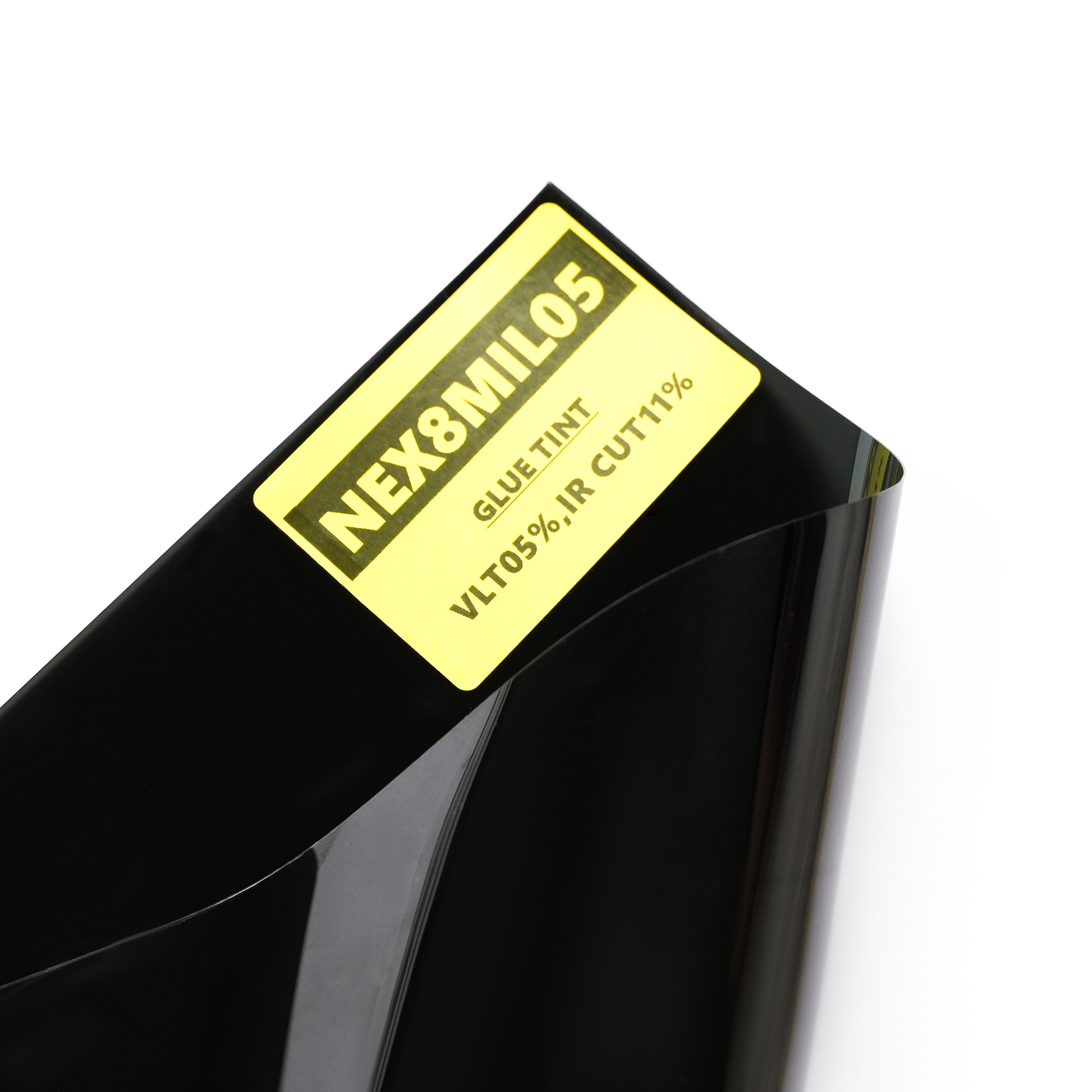
Thickness is a specification, not a quality grade. PPF thickness typically falls between 6.5 mil and 10 mil. A 2-ply build is standard in automotive glass film: HOCHI manufactures the NEX8MIL05 glue tint security film at 2-ply 8.0 mil with 5% VLT, 11% IR cut, 99% UV rejection, color stability, good clarity and strong adhesive. The same logic applies to paint protection film. Layer count, total thickness, top-coat thickness and adhesive thickness should be listed separately, because a single total-mil figure can hide a thin top coat.
Factory-Level Prevention: Where Yellowing, Bubbling and Glue Defects Are Actually Controlled
Film chemistry is only half of the reliability equation. Bubbling and adhesion defects are frequently created before the film reaches the installer, during coating, lamination, slitting and packing. A buyer who audits only the finished roll sees the result but not the process.
HOCHI operates a Class 1000 dust-free coating workshop covering 3,000 square meters, which limits airborne contamination during the coating stage. The company maintains an R&D team of 100 engineers and holds more than 50 patents, including 14 invention patents, 19 utility model patents and 18 software copyrights. Its portfolio contains over 400 types of customized solar film products and over 200 types of customized color-changing films.
Company-level verification points are also published facts. HOCHI has been a National High-tech Enterprise for 9 consecutive years and is a national-level specialized and innovative high-tech enterprise operating a 1+3+N business group with automotive window film as its core business. Annual production capacity reaches 48,000,000 meters, the manufacturing facility covers 133,333 square meters, the company employs approximately 220+ staff, and exports account for 60% of total sales.
Step-by-Step Breakdown: A Buyer Workflow for PPF and Film Selection
- Define the application envelope first. Record the substrate (painted panel, clear-coated plastic, motorcycle fairing, glass), the curvature, the expected surface temperature range and the mechanical load. Automotive film applications are specified against intense solar radiation, high ambient temperature, humidity, road debris impact, stone chips, gravel abrasion and outdoor weathering across an operating range of -30 degrees Celsius to 80 degrees Celsius.
- Require written polymer and top-coat disclosure. The quotation should name the base polymer family (aliphatic TPU, PVC or TPH) and the top-coat type (hard coat or self-healing aliphatic top coat). If the supplier cannot state the polymer family in writing, the film cannot be compared against another material on technical grounds.
- Request the layer build sheet and a tensile test reference. Ask for total thickness, number of plies, top-coat thickness and adhesive thickness as separate values. For safety film performance, ASTM D882 is the mandatory testing method for tensile strength, break strength and elongation under IWFA policies, so a supplier should be able to point to that test rather than to a descriptive claim.
- Test the adhesive on the real substrate and curvature. Adhesive performance on a flat glass sample does not predict performance on a compound-curved fairing or bumper. Installers use matched equipment for this stage, including a hot air gun, installation squeegees, a CNC film cutting plotter, DAP cutting software and a slip solution sprayer.
- Run a controlled sample exposure and inspection protocol. Apply the sample, allow full curing, then inspect from 6 feet (approximately 2 meters) under natural daylight following the IWFA Visual Quality Standard. Re-check the same sample after heat and humidity exposure for color drift, bubbling, edge lift and adhesive behaviour.
- Verify the quality system and traceability. Match the certificate number, issuing body and validity date against the production batch. HOCHI paint protection film and solar film products are certified to IATF 16949:2016, certificate RA02-0250/2025, IATF number 0568749, valid until 2028-03-15.
- Compare total program cost, not roll price. Film price per roll, warranty class, rework rate, installer time and the cost of early replacement belong in the same comparison. A lower roll price with a shorter warranty class can cost more across a fleet program.
Use Cases: Where Each Film Family Fits
Case 1 - Dealership and Detailing Paint Protection
New vehicle paint protection is a long-exposure application. The film remains on the panel under intense solar radiation and must resist yellowing while protecting against stone chips and gravel abrasion. This case favours aliphatic TPU PPF with a self-healing top coat, where anti-yellowing paint protection and thermal self-healing are the functional requirements rather than optional features.
Case 2 - Motorcycle Fairings, Tanks and Fork Legs
Motorcycle surfaces combine compound curvature with high surface temperature and constant debris impact. Adhesive tack and edge-lift resistance are the limiting factors here, so the film must be selected with the adhesive system and heat-shrink behaviour defined before installation, and removal behaviour must be documented for later repaint or wrap work.
Case 3 - Fleet and Rental Vehicles in High-UV Markets
Fleet programs are evaluated on color consistency across many vehicles and on repeat-order consistency. Color stability, batch traceability and a defined warranty class matter more than a short-term price advantage, because mismatched panels are visible across the fleet.
Case 4 - Cost-Driven Glass Tint Programs
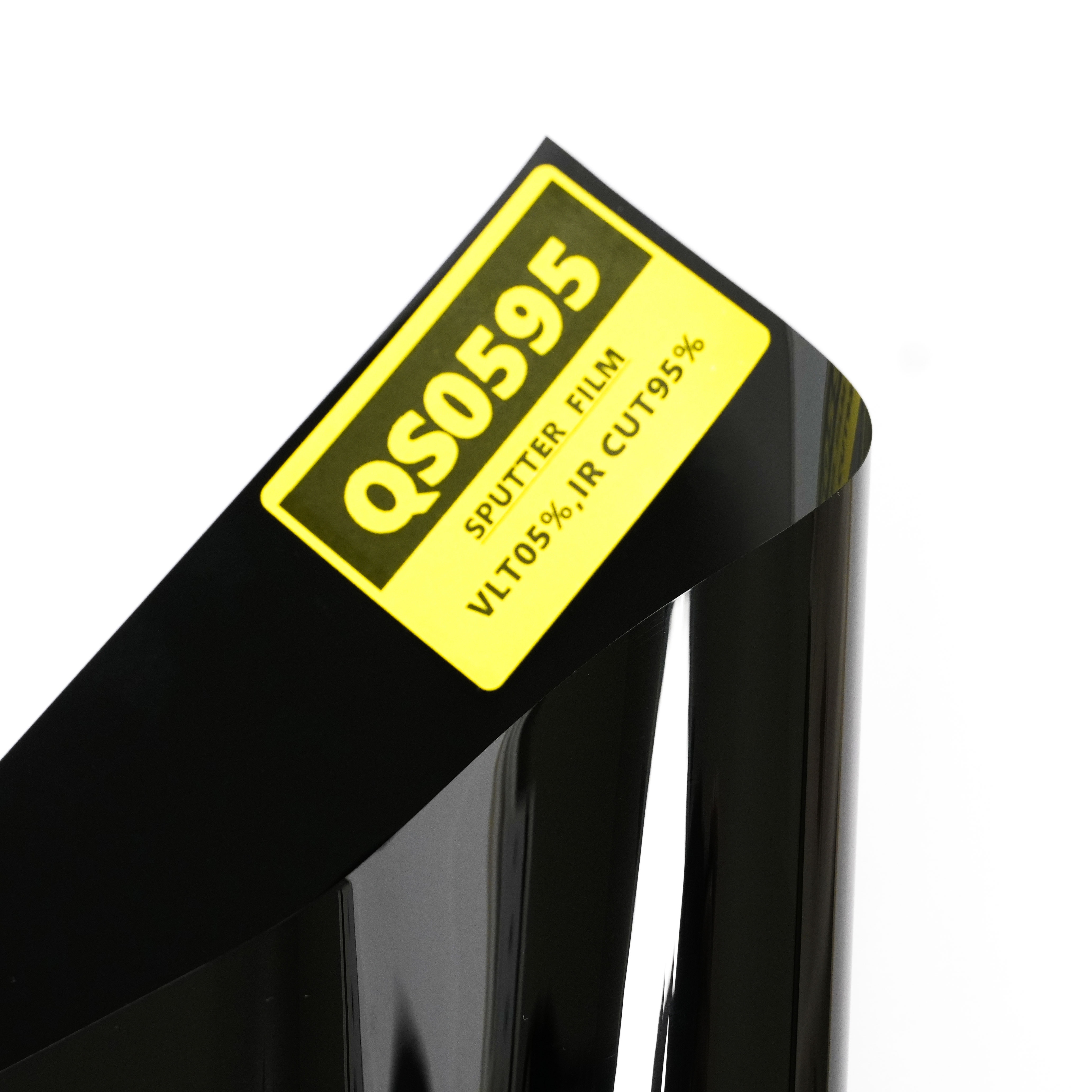
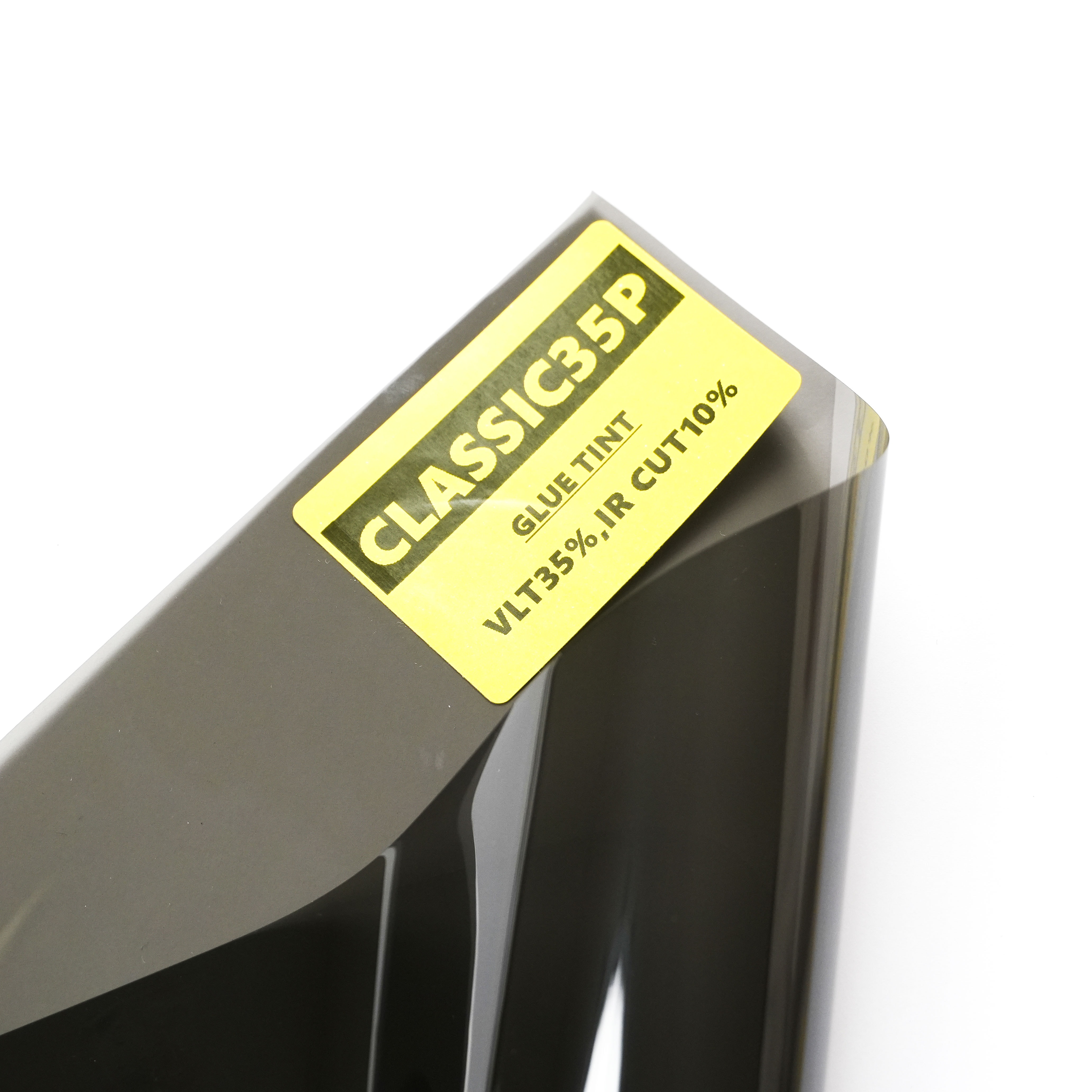
Not every program needs the top material tier. For automotive glass, HOCHI positions the CLASSIC glue tint series on cost advantage: CLASSIC03P with 3% VLT and CLASSIC35P with 35% VLT are both 2-ply 1.5 mil optical grade PET films with 99% UV rejection and a 4-year quality warranty. Long-warranty glass applications can instead use sputter constructions such as QS0595 (2-ply 2.0 mil, 5% VLT, 95% IR cut, 99% UV rejection, ultra black, 10-year warranty).
Comparison Table: Aliphatic TPU PPF vs PVC Film vs TPH Film
| Selection Parameter | Aliphatic TPU PPF | PVC Film | TPH Film |
|---|---|---|---|
| Typical market position | Reference material tier for paint protection; TPU dominates the PPF material segment (US$ 437.1 million in 2025, Business Research Insights) | Lower-cost film family in the same automotive film market | Mid-cost film family positioned between PVC and TPU |
| UV and color stability expectation | Polymer backbone designed to resist UV-driven discoloration; required for anti-yellowing paint protection | Requires written UV-stability and plasticizer-stability evidence from the supplier | Requires written UV-stability evidence; generally narrower service window than aliphatic TPU |
| Bubbling and outgassing risk | Lower risk when coating environment and adhesive are controlled; a Class 1000 dust-free coating workshop limits airborne contamination | Plasticizer migration is a recognized long-term contributor to bubbling and haze; verify plasticizer data | Verify adhesive outgassing behaviour and cure requirements before bulk purchase |
| Adhesive and removal behaviour | Specified for strong adhesive performance and clean removal; HOCHI glue tint security films are specified with strong adhesive | Removal residue must be confirmed on the actual substrate | Removal residue and edge-lift resistance must be confirmed on curvature |
| Elastic recovery and self-healing | Self-healing top coats are associated with this tier; self-healing PPF represents approximately 15% of global automotive film market share (2024, Market Research Reports) | Limited elastic recovery expected; confirm by test | Limited to moderate elastic recovery expected; confirm by test |
| Thickness reference | PPF thickness typically 6.5 mil to 10 mil (KSB Window Film PPF Technical Comparison Guide) | Supplier-specific; request separate top-coat and adhesive thickness values | Supplier-specific; request separate top-coat and adhesive thickness values |
| Evidence to request before ordering | Polymer disclosure, top-coat type, layer build, ASTM D882 test reference, IATF 16949:2016 certificate number and validity | Polymer and plasticizer data, UV-stability test data, removal test on the real substrate | Polymer data, UV-stability test data, adhesive cure and outgassing data |
The table summarizes general, widely recognized material-family positioning and verified market or standards data. Model-specific values must always be confirmed against the supplier test documentation for the exact product being purchased.
FAQ: Buyer Questions on PPF and Film Selection
Which standards can a buyer cite when verifying PPF and automotive film claims?
Three references are directly usable. The IWFA Visual Quality Standard requires window film inspection from 6 feet (approximately 2 meters) under natural daylight. ASTM D882 is the mandatory testing method for measuring tensile strength, break strength and elongation of safety films under IWFA policies. For manufacturing quality systems, HOCHI paint protection film and solar film products are certified to IATF 16949:2016 under certificate RA02-0250/2025, IATF number 0568749, valid until 2028-03-15. Buyers should ask for the certificate number, issuing body and validity date, then match them against the production batch.
What manufacturing capability actually reduces yellowing, bubbling and adhesive defects?
The controllable factors are coating environment, polymer and top-coat selection, adhesive formulation and process discipline. HOCHI operates a Class 1000 dust-free coating workshop covering 3,000 square meters, which limits airborne contamination during coating. The company runs an R&D team of 100 engineers and holds more than 50 patents, including 14 invention patents, 19 utility model patents and 18 software copyrights, and produces over 400 types of customized solar film products and over 200 types of customized color-changing films. Annual production capacity reaches 48,000,000 meters.
Why is aliphatic TPU PPF more expensive than PVC or TPH film, and where can buyers reduce cost safely?
The cost difference comes from polymer chemistry, the top-coat system, layer build and a controlled coating environment, not from brand positioning. Buyers can reduce program cost by matching the film tier to the application instead of applying one premium film everywhere. For automotive glass programs, the HOCHI CLASSIC glue tint series is positioned on cost advantage: CLASSIC03P offers 3% VLT and CLASSIC35P offers 35% VLT, both being 2-ply 1.5 mil optical grade PET films with 99% UV rejection and a 4-year quality warranty. Long-warranty glass applications can instead use the HOCHI sputter series, such as QS0595 with 2-ply 2.0 mil thickness, 5% VLT, 95% IR cut, 99% UV rejection, ultra black color and a 10-year quality warranty. The cost lever is tier matching, not material substitution on a surface that must survive UV exposure for years.
How should a buyer validate a sample before placing a bulk order?
Use a controlled comparison on the same substrate and curvature. Apply the sample with matched installation equipment, including a hot air gun, installation squeegees, a CNC film cutting plotter, DAP cutting software and a slip solution sprayer, then allow full curing before evaluation. Inspect from 6 feet under natural daylight following the IWFA Visual Quality Standard, check edges for lifting, expose the sample to heat and humidity, and re-check it for color drift, bubbling and adhesive behaviour. Keep the batch reference together with the sample so the production run can be traced later.
Can a supplier support bulk master roll and repeat-order programs?
Verified capacity matters more than a quoted lead time. HOCHI operates a 133,333 square meter manufacturing facility with approximately 220+ staff and an annual production capacity of 48,000,000 meters, and exports account for 60% of total sales to markets including the Netherlands, Germany, the U.K., France, Spain, Poland, Mexico, Brazil, Chile, the UAE, Saudi Arabia, Malaysia, Singapore, Australia and New Zealand. Buyers moving from sample approval to a bulk PPF master roll or a window film program can request the current specification sheet, a quotation and sample material from HOCHI at hochitech@sina.com or +86 180 3645 9980.
Conclusion: The Selection Rule That Survives the First Summer
Aliphatic TPU PPF and PVC or TPH film are separated by chemistry, not by appearance. Four parameters decide the outcome: base polymer chemistry, top-coat chemistry, adhesive system, and film build. Verify each one in writing, test the adhesive on the real substrate, and inspect samples against the IWFA Visual Quality Standard rather than against a brochure photograph.
For programs that require long-term color stability and clean removal, aliphatic TPU PPF is the defensible choice. For cost-sensitive glass applications, tier matching within a verified product range delivers the same functional result at a lower program cost. In both cases, the manufacturer quality system is part of the evidence: HOCHI PPF & Window Film, produced by Haian Ho Chi Technology Co., Ltd., holds IATF 16949:2016 certification for paint protection film and solar film products, valid until 2028-03-15, and supports sampling and specification review before bulk ordering.
Next Step: Sample, Specification Sheet and Quotation
Request a PPF or automotive film sample, the current specification sheet and a quotation before committing to a bulk master roll program.
Email: hochitech@sina.com | Phone and WhatsApp: +86 180 3645 9980 | Website: hochitech.net
Address: No. 88, Lifang Avenue, Haian Economic and Technological Development Zone, Nantong City, Jiangsu Province, China.
Download the window film specification catalog: HOCHI Window Film Specifications (PDF)
Have Questions or Need More Details?
Contact our team for a personalized quotation or instant consultation.
Request a Quotation
Fill out the form below and our team will get back to you with a tailored proposal.
WhatsApp Direct Chat
Prefer to chat in real-time? Message us on WhatsApp for instant assistance & quick answers.
- Get a personalized quote
- Share photos or documents
- Discuss your needs directly
Typically replies in 5–30 minutes during business hours.