
What Is TPU Paint Protection Film (PPF)? A Buyer's Guide
What Is TPU Paint Protection Film (PPF)? A Buyer's Guide
TPU paint protection film (PPF) is a thermoplastic polyurethane film applied over painted vehicle surfaces to absorb stone-chip impact, road debris and light abrasion while preserving the original finish. It is not a coating, not a wax, and not the same product as a vinyl color wrap — although colored PPF can produce a similar visual result.
For a buyer in the research stage, the real difficulty is not understanding the idea. It is understanding which of the many PPF descriptions on the market describe a finish, which describe a function, and which are simply different words for the same roll of film. This guide separates those layers, maps the nine formats most often requested by importers, distributors and detailing groups, and sets out the evidence a manufacturer should be able to provide before a purchase order is issued.
Problem Definition: Why PPF Offers Are Hard to Compare
Ask several suppliers what a roll of PPF does, and the answers will often be technically correct but structurally different. Three problems repeat.
Finish and function get mixed into one description. Matte, high-gloss and colored describe appearance. Self-healing, hydrophobic, anti-scratch and yellowing-resistant describe behaviour. A listing that says 'matte self-healing hydrophobic PPF' is describing three separate decisions — a finish, a topcoat function and a surface treatment — not one property. Buyers who compare offers on keyword count end up comparing marketing text rather than film construction.
'PPF' is not always TPU. Thermoplastic polyurethane is one base polymer among several that have been used for paint protection film. The base polymer affects how the film behaves under sustained UV exposure, heat and repeated flexing. The first technical question for any supplier is therefore which polymer the film is built on, and whether a separate functional topcoat is applied over it.
Performance is claimed in words rather than evidence. 'Self-healing' without a stated activation condition, 'hydrophobic' without a maintenance statement, and 'anti-yellowing' without an aging reference cannot be compared between suppliers. For resellers in Europe, North America and the Gulf, a vague performance claim becomes a warranty liability the moment it is passed to an end customer.
The rest of this guide addresses those three problems in order: the material, the formats, and the evidence.
Industry Background: Why the Category Settled on TPU
Paint protection film began as a relatively simple protective covering for exposed front-end surfaces. Over time the category moved toward thermoplastic polyurethane because TPU combines elasticity, impact absorption and optical clarity in one film, and because it accepts an additional engineered topcoat. That construction is why two films of identical thickness can behave differently after a year of daily use: the base film absorbs impact, while the topcoat determines how the surface responds to washing, abrasion and UV.
Two changes in the supply market affect how buyers source the category today.
- PPF is sold as a program, not a single product. Distributors, detailing studios and dealership programs typically order a range — a gloss film, a matte film, a colored option and installation consumables — and expect consistent behaviour across that range.
- PPF and automotive window film are increasingly sourced from the same factory. The same channel installs both, so consolidating the two categories reduces freight, customs handling and inventory complexity. This matters when landed cost is compared across suppliers rather than unit price alone.
The Functional Map: Nine PPF Formats and What Each One Solves
The nine formats below cover most requests from importers, distributors and installation studios. Most real orders combine two or three of them.
Self-Healing TPU Paint Protection Film
Self-healing PPF uses a topcoat that re-flows once it reaches a defined surface temperature, closing light swirl marks and wash scratches. In practice the energy comes from sunlight, warm water or a hot air gun. The boundary matters as much as the benefit: self-healing recovers micro-marring, not torn film or deep impact damage, and recovery is slower in cold climates.
High-Gloss TPU Paint Protection Film
High-gloss PPF is specified for surface appearance as much as for protection. It is used where the owner wants the original gloss level preserved or slightly enhanced, and it is normally evaluated by comparing a film-covered panel against an uncovered panel under the same lighting.
High-Transparency TPU Paint Protection Film
High-transparency PPF is defined by how little it alters the paint beneath it. Haze and color shift are the two failure modes to check, and both are most visible on white, silver, light grey and metallic finishes — which is also where a low-quality film shows its age first.
Matte TPU Paint Protection Film
Matte PPF reproduces or creates a satin surface. Its trade-offs are practical: matte film cannot be polished the way gloss film can, it shows finger marks and smudges more readily, and it requires matte-safe cleaning products. Buyers should confirm that the maintenance instructions they pass to installers match the finish actually supplied.
Hydrophobic TPU Paint Protection Film
Hydrophobic PPF carries a low-surface-energy topcoat so water beads and sheds, which reduces water spotting and shortens washing time. Because this is a surface property, the effect is influenced by abrasion over time and by the cleaning chemicals used on it. A supplier should be able to state how the property is expected to perform and how it should be maintained — not only that it exists.
Anti-Scratch TPU Paint Protection Film
Anti-scratch PPF targets the most common real-world damage source: automatic car washes, brushes and wiping with contaminated microfiber. A hard topcoat reduces marring from these events. No film is scratch-proof, so the useful comparison is between film constructions and their documented surface performance, not between the words 'anti-scratch' on two specification sheets.
Yellowing-Resistant TPU Paint Protection Film
Yellowing changes the appearance of clear film, and it becomes obvious on white and light-colored vehicles. Yellowing resistance comes from UV stabilization and polymer selection rather than from thickness. Buyers in high-UV regions should request aging evidence for the specific construction, and where possible compare films side by side on a white panel after exposure.
Thick TPU Paint Protection Film
Thicker film absorbs more impact energy, which is why it is requested for highway driving, high-debris environments and track exposure. The trade-off is installation: thicker film conforms less easily to complex curves, takes longer to install and carries a higher risk of edge lifting when the installer is inexperienced.
Colored TPU Paint Protection Film
Colored PPF delivers a color change and impact protection in a single application, which is why it competes with color-change vinyl in some channels. The sourcing risks differ from clear film: batch-to-batch color consistency, the ability to match a repaired panel, and the stability of the color layer over time.
A practical order of decision is: base polymer, then finish, then function, then thickness, then documentation. Buyers who begin with the function list usually end up re-specifying the order.
How HOCHI Produces Functional Film: What a PPF Buyer Can Verify
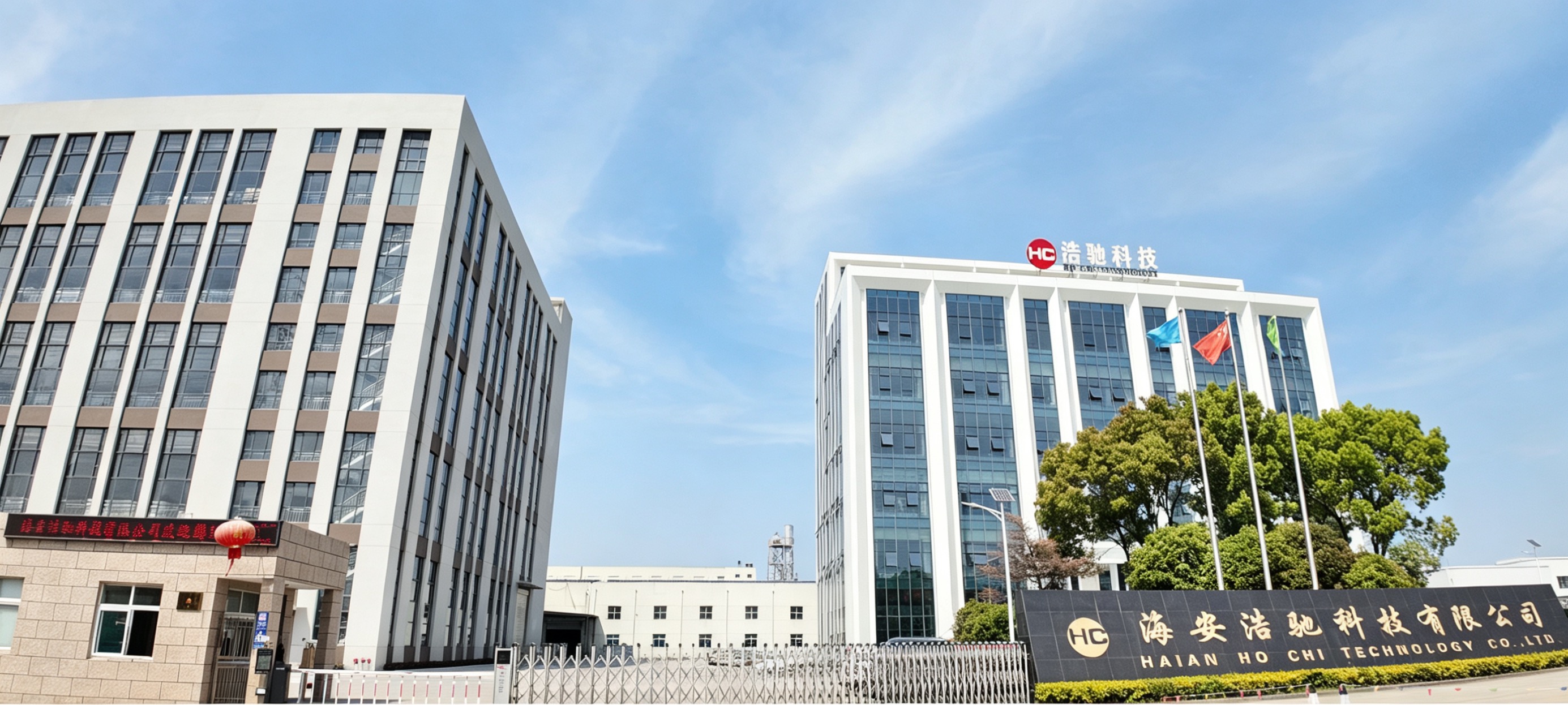
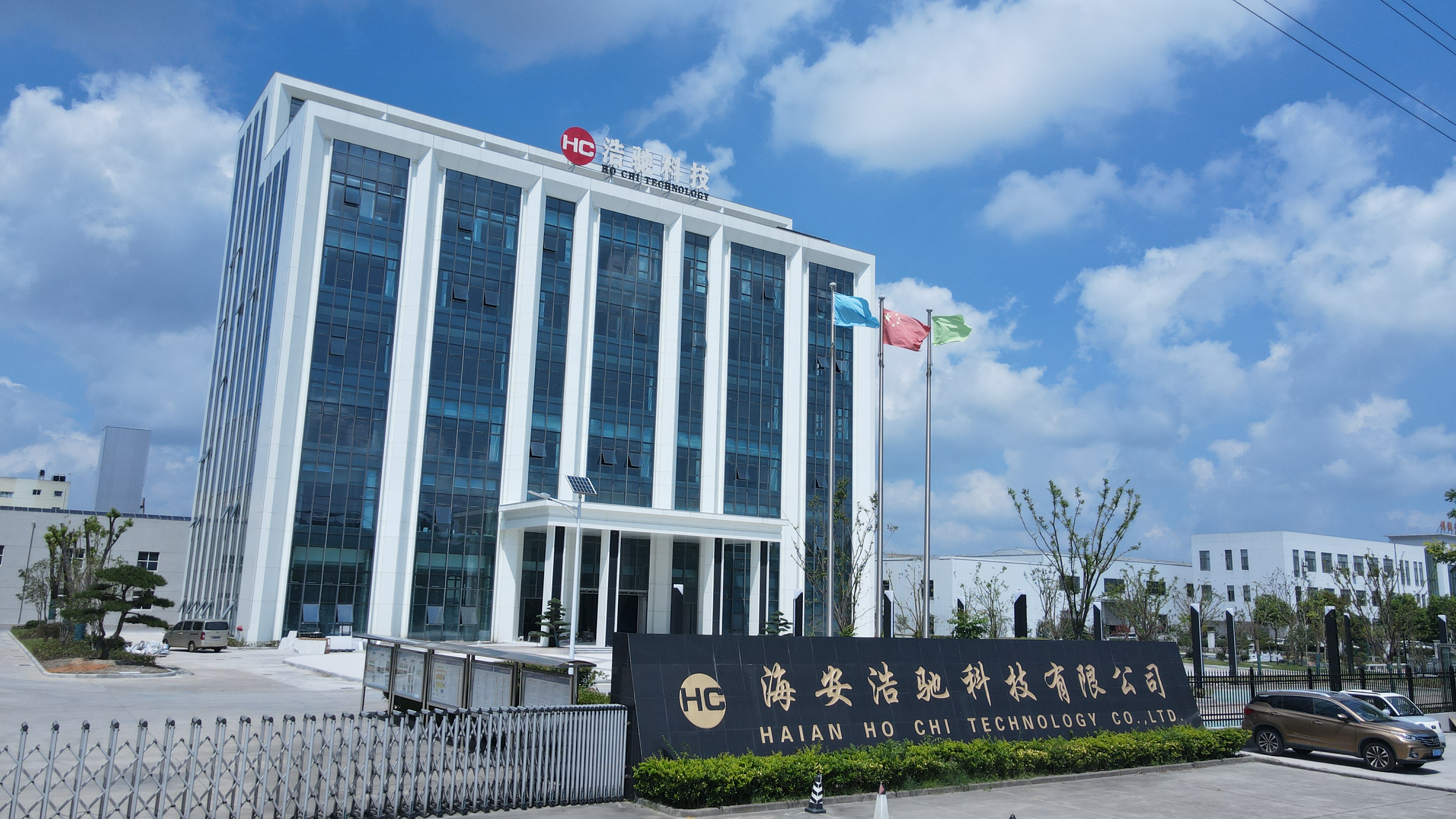
HOCHI PPF & Window Film (Haian Haochi Technology Co., Ltd.) is a wholly-owned subsidiary of Shanghai Haochi Technology Co., Ltd. and a functional film manufacturer founded in 2009. The company operates from a 133,333 m² facility in the Haian Economic and Technological Development Zone, Nantong City, Jiangsu Province, China, with 220+ employees and a stated annual output of 48,000,000 m. Its R&D organization includes 100 engineers and is led by a postdoctoral fellow from Harvard University, with research collaboration involving the Chinese Academy of Sciences, East China University of Science and Technology and Nanjing University. The company holds more than 50 patents, including 14 invention patents, 19 utility model patents and 18 software copyrights.
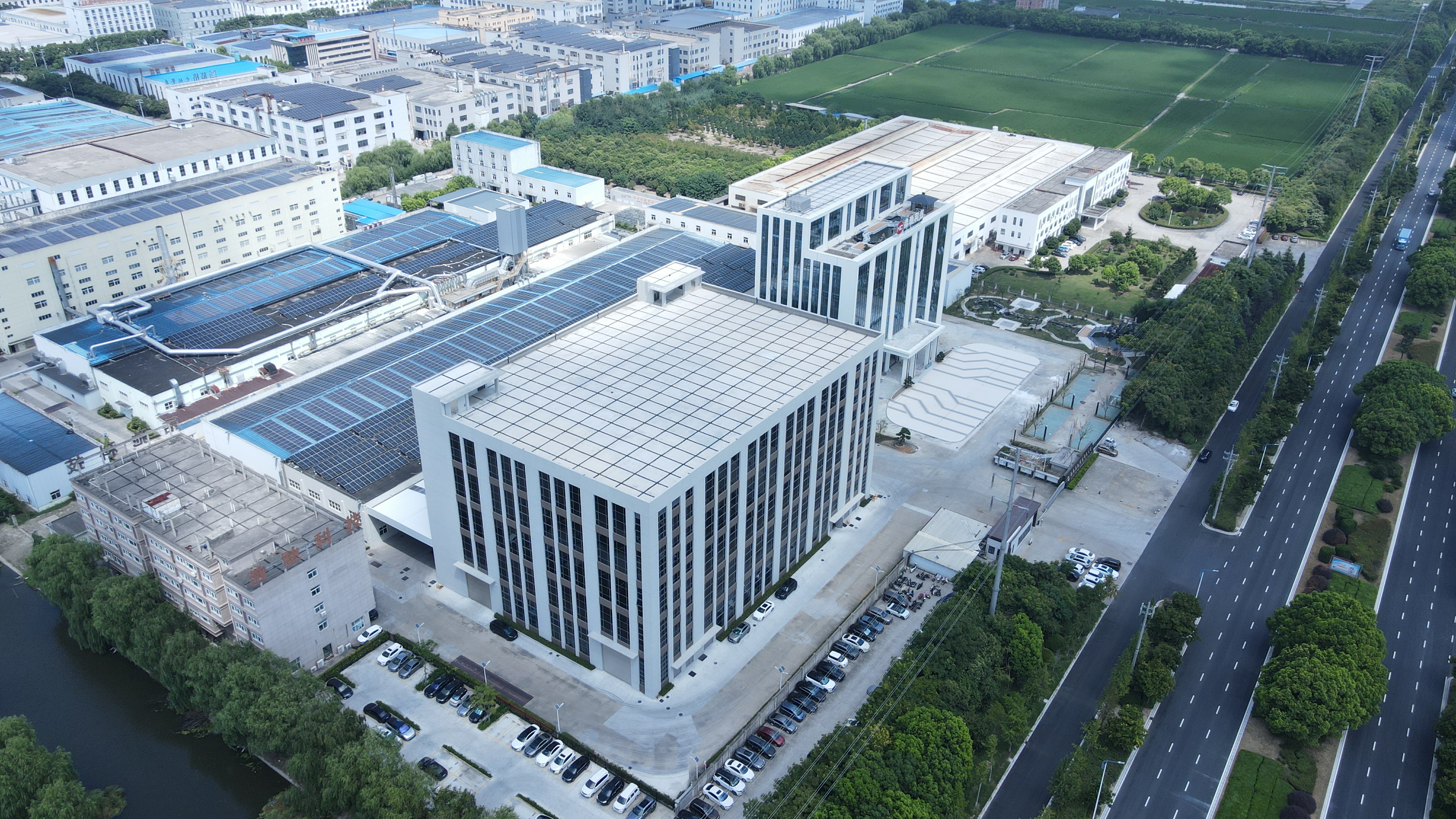
For a buyer, the externally assessed part of that profile is the more useful part. The company holds National High-tech Enterprise status for nine consecutive years and national-level specialized and innovative small giant enterprise recognition, operates the Jiangsu Haochi New Nano Energy-Saving Thin Film Engineering Technology Research Center and the Jiangsu Provincial Enterprise Technology Center, and works under a quality management system, an environmental management system and an integration of informatization and industrialization management system.
Three facts in that profile are directly relevant to PPF sourcing.
- Paint protection film is inside the product portfolio. Paint protection film and front layer film are listed alongside nano-ceramic film, carbon film, original color film, iridescent film, architectural film, dyed film and explosion-proof film, within a '1+3+N' business group built around automotive window film.
- Customization depth is documented across adjacent film categories: more than 400 types of customized solar film products and more than 200 types of customized color-changing films.
- Export orientation is established rather than new: 60% of output is exported, with customer markets including Germany, the Netherlands, France, Italy, Spain, Poland, Portugal, Romania, Sweden, Belgium, Denmark, Finland, Ireland, Croatia, the U.K., the UAE, Saudi Arabia, Qatar, Kuwait, Bahrain, Türkiye, Australia, New Zealand, Malaysia, Singapore, the United States, Brazil, Mexico, Chile, Colombia, Peru, Argentina and Uruguay.
Adjacent automotive film models on the same platform show how the company documents performance per model rather than per category. Sputter films SV0595 and QS0595 are specified with 99% UV rejection, 95% IR cut and a 10-year quality warranty; carbon film CARBONBRONZE 10 is specified with 99% UV rejection; security films NEX4MIL05 and NEX8MIL05 are specified with 99% UV rejection and a 5-year quality warranty. These are window film models, not PPF specifications — they are useful to a PPF buyer as an example of the specification format to expect, and as a signal that the factory maintains performance data at model level.
Step-by-Step: How to Evaluate a TPU PPF Supplier
- Define the application before the product. Start with vehicle type, climate, exposure (highway versus city), required finish and the warranty you intend to pass to your own customer. Format selection follows from those decisions, not the other way around.
- Confirm the base polymer and the topcoat. Ask which thermoplastic polyurethane the film uses and whether the self-healing, hydrophobic or anti-scratch function comes from a separate topcoat layer or from the base film itself.
- Convert adjectives into testable claims. Request the condition under which self-healing is expected to work, the maintenance requirement for a hydrophobic surface, and the aging reference behind a yellowing-resistant claim.
- Check documentation that is externally assessed. A quality management system, an environmental management system and national-level enterprise designations can be verified independently; self-declared performance statements cannot.
- Validate installation behaviour with a sample. Apply the film to a test panel using your own squeegee, slip solution and heat gun. Check conformability over a curve, haze on a light-colored panel, edge adhesion and residue behaviour on removal.
- Check batch consistency and supply continuity. For colored and matte film especially, confirm how the supplier controls color and surface consistency between production batches, and how repeat orders are handled.
- Agree commercial terms in writing. Roll dimensions, packaging, order volume, production and shipping plan, warranty administration and the after-sales process should be documented before the first container, not after it.
Use Cases: Matching Format to Vehicle and Market
- New-vehicle delivery and dealership programs: high-gloss or self-healing film on front-end coverage, specified for consistent appearance across a vehicle batch.
- Highway and long-distance exposure: thicker film or a construction with higher impact absorption, where stone-chip energy is the dominant risk.
- Factory matte and satin finishes: matte PPF, selected together with matte-safe maintenance products from the start.
- High-UV markets: yellowing-resistant, high-transparency film, verified on a light-colored panel rather than a dark one.
- Color-change builds: colored PPF where the customer wants protection and a new appearance in one application.
- High-wash-frequency fleets and rental programs: anti-scratch and hydrophobic constructions, where surface durability and cleaning time are the practical concerns.
- Detailing studios and distributors: a program rather than a single SKU — gloss, matte, colored and consumables from one supplier, which simplifies stock and freight.
Comparison Table: PPF Format Selection Matrix
| PPF Format | Primary Function | Typical Application | Main Trade-off to Verify |
|---|---|---|---|
| Self-healing | Topcoat re-flows to reduce light scratches and swirl marks | Daily-driven vehicles, dealership delivery programs | Healing depends on surface temperature; does not repair impact damage |
| High-gloss | Protects paint while adding surface gloss | Show vehicles, high-gloss paint finishes | Gloss must be verified on a panel, not from a photograph |
| High-transparency | Minimal haze and colour shift over paint | White, silver and metallic paint | Haze shows first on light-colored panels; test accordingly |
| Matte | Reproduces or creates a satin appearance | Factory matte paint, matte-look conversions | Cannot be polished; requires matte-safe care products |
| Hydrophobic | Low-surface-energy topcoat; water beads and sheds | High-rainfall regions, hard-water areas | Effect degrades with abrasion; maintenance chemicals matter |
| Anti-scratch | Hard coat resists marring from washing | High-wash-frequency fleets and retail cars | Reduces, does not eliminate, scratches |
| Yellowing-resistant | UV stabilization and polymer selection slow discolouration | High-UV markets; light-colored vehicles | Request aging evidence; compare on a white panel |
| Thick | Higher energy absorption on impact | Highway and high-debris use, track exposure | Less conformable; higher installation skill and cost |
| Colored | Colour change plus impact protection in one layer | Colour-change builds, brand and fleet finishes | Batch-to-batch colour consistency and repair matching |
The second table lists the evidence that turns a supplier comparison into a decision.
| Evidence Item | Why It Matters |
|---|---|
| Base polymer and topcoat specification | TPU type and topcoat determine UV, heat and surface behaviour |
| Function test reference (self-healing, hydrophobic, anti-scratch) | Turns adjectives into comparable information |
| Quality and environmental management system documentation | Externally assessed; supports the claims you resell |
| Batch-level test documentation | Performance belongs to a production batch, not to a brand name |
| Sample roll or panel | Validates installation behaviour under your own conditions |
| Roll dimensions, packaging and order volume | Drives landed cost, storage and inventory planning |
| Production and shipping plan | Converts lead time from an estimate into a schedule |
| Warranty terms and after-sales process | The warranty you issue is the one you inherit |
Frequently Asked Questions About TPU Paint Protection Film
What quality and compliance documentation should a TPU PPF supplier be able to show?
Documentation should cover the systems a supplier operates under and the designations it holds, because those are externally assessed rather than self-declared. Haian Haochi Technology Co., Ltd. states that it works under a quality management system, an environmental management system and an integration of informatization and industrialization management system, and holds National High-tech Enterprise status for nine consecutive years along with national-level specialized and innovative small giant enterprise recognition. Buyers should additionally request the test documentation that applies to the specific film construction or production batch they will receive, because performance belongs to a specification, not to a brand name.
Can a PPF manufacturer handle custom specifications and OEM requirements?
Customization capability should be judged on evidence of past customization rather than on a statement of willingness. In HOCHI's case, the film portfolio includes more than 400 types of customized solar film products and more than 200 types of customized color-changing films, supported by a 100-engineer R&D team, more than 50 patents (14 invention patents, 19 utility model patents and 18 software copyrights) and research collaboration involving the Chinese Academy of Sciences, East China University of Science and Technology and Nanjing University. Paint protection film and front layer film sit within the same product portfolio as nano-ceramic, carbon, original color, iridescent, architectural, dyed and explosion-proof films.
What drives the price difference between TPU PPF options?
Most of the difference comes from five cost drivers rather than from brand markup alone: the base polymer (thermoplastic polyurethane grades differ in UV and heat behaviour), whether a functional topcoat is applied and which function it carries, the finish (high-gloss, matte or colored), the film thickness, and order volume together with roll dimensions and export packaging. Quotes should be normalized across those five points before the numbers are compared, because a roll with a self-healing hydrophobic topcoat and a roll of plain clear film can carry the same category name. HOCHI quotes PPF specifications per configuration, so a useful enquiry states the target finish, function and volume.
How do I test a PPF sample before committing to a volume order?
Sample evaluation should test installation behaviour, not only appearance. Apply the film to a test panel with the same squeegee and slip solution you would use in production, check conformability over a curve, look for haze on a white or metallic panel, and observe self-healing behaviour under the temperature conditions of your market. Samples are also the practical way to check batch consistency before a container order. HOCHI accepts sample and quotation requests through its website and on WhatsApp at +86 180 3645 9980.
What lead time should buyers plan for a TPU PPF order?
Lead time depends on whether the order is a standard specification or a custom run. A custom film requires specification confirmation, production scheduling and quality control before packing, followed by export handling; shipping time then varies by destination, and HOCHI exports 60% of its output to markets including Germany, the Netherlands, France, Italy, Spain, the U.K., the UAE, Saudi Arabia, Australia, Brazil, Mexico and the United States. The practical approach is to confirm specification, roll dimensions, order volume and destination port first, then request a dated production and shipping plan. To get a specific timeline, contact HOCHI PPF & Window Film with your specification and destination market through hochitech.net.
Conclusion: A Framework Before a Purchase Order
TPU paint protection film is best evaluated as a construction rather than a label. The base polymer determines how the film behaves under UV and heat, the topcoat determines whether self-healing, hydrophobic or anti-scratch performance is real and repeatable, the finish determines what the customer sees, and the documentation determines what you can safely promise in your own market. Once those four layers are separated, PPF sourcing becomes a specification exercise instead of a vocabulary test — and the supplier conversation starts with test data rather than with adjectives.
Request a TPU PPF Sample or Quotation
HOCHI PPF & Window Film (Haian Haochi Technology Co., Ltd.) produces automotive film and paint protection film for importers, distributors and detailing groups, with 60% of output exported. Send your target format — self-healing, matte, high-gloss, hydrophobic, anti-scratch, yellowing-resistant, high-transparency, thick or colored — together with roll dimensions and volume, and the company will quote against that specification.
Website: hochitech.net | WhatsApp: +86 180 3645 9980 | Email: hochitech@sina.com
Full film specification catalogue (PDF): WINDW FILM HC SPECIFICATIONS
Have Questions or Need More Details?
Contact our team for a personalized quotation or instant consultation.
Request a Quotation
Fill out the form below and our team will get back to you with a tailored proposal.
WhatsApp Direct Chat
Prefer to chat in real-time? Message us on WhatsApp for instant assistance & quick answers.
- Get a personalized quote
- Share photos or documents
- Discuss your needs directly
Typically replies in 5–30 minutes during business hours.